
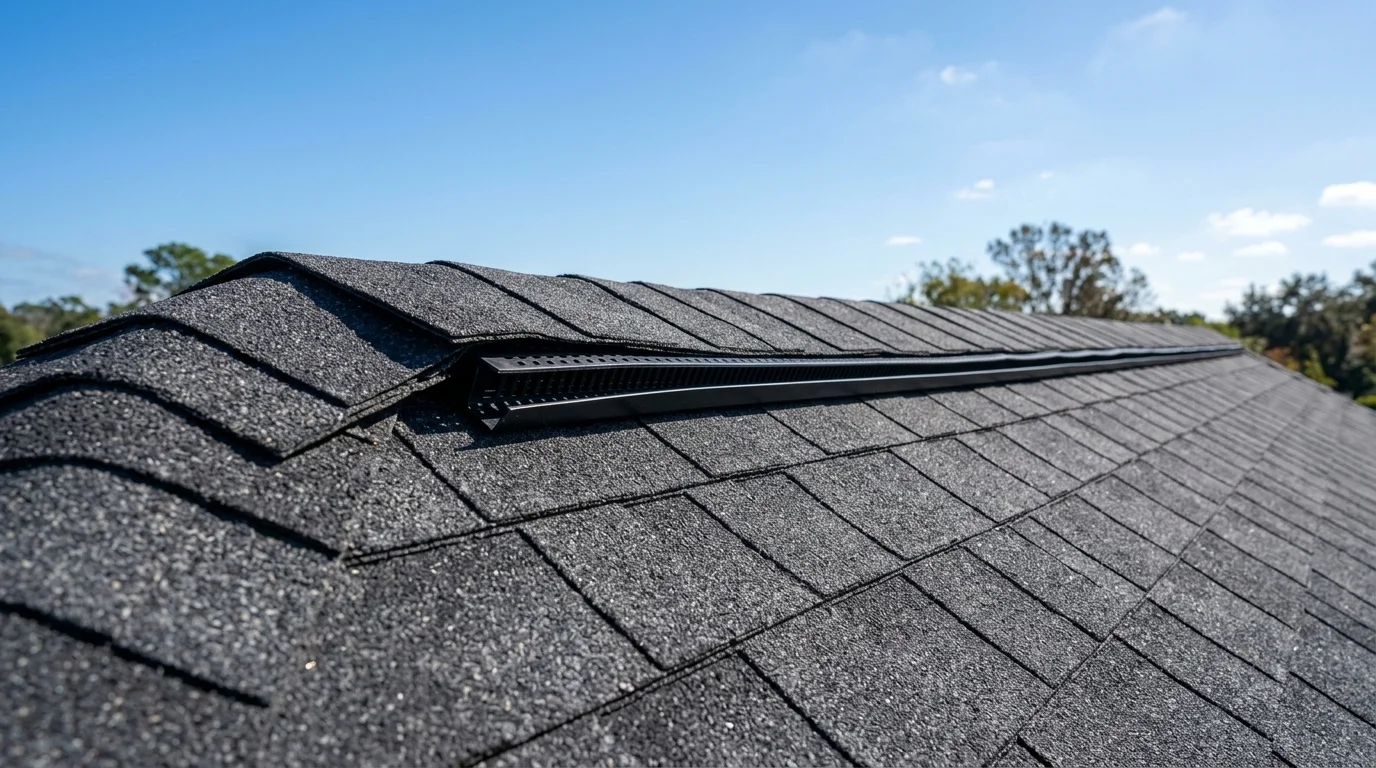
Step into an under-ventilated attic in Pearland or Angleton at 3:30 PM in August and you’ll hit a wall of stagnant 150°F–160°F heat. Most homeowners blame their AC tonnage when upstairs bedrooms won’t drop below 77°F—never realizing their roof peak lacks an escape valve.
1. The "Oven Effect": Why Poor Ventilation Cuts Roof Life in Half
Your shingles already face brutal UV solar load from above. When blocked soffits or inadequate exhaust trap superheated humid air directly under the OSB decking, shingles get baked from both sides simultaneously:
- Volatile asphalt oils vaporize early, turning 30-year architectural shingles stiff and cupped in 9–12 years.
- Trapped Gulf Coast humidity condenses on rafters during winter cold snaps, spawning dark attic mildew and warping plywood.
- Radiant heat radiates straight down through attic ductwork and insulation, forcing your AC compressor to run 4+ extra hours daily.
2. The Golden Rule: 50% Soffit Intake / 50% Peak Exhaust (1:150 or 1:300 NFA)
Exhaust vents at the peak cannot move stale air in a vacuum—cooler outside air MUST enter freely down along the lower eaves. Texas residential building code requires at least 1 square foot of Net Free Ventilation Area (NFA) per 150 square feet of attic floor (or 1:300 when intake and exhaust are strictly balanced 50/50 at high and low elevations).
During every SSB Roofing WPI-8 roof replacement, our crew checks your open-attic soffit vents for painted-over perforation screens or blown cellulose insulation choking off airflow before selecting our exhaust design.
3. The Costly Mistake: Mixing Ridge Vents With Turbines or Powered Fans
Physics follows the path of least resistance: a spinning fan or ridge vent sucks fresh air down through the neighboring exhaust opening just 10 feet away, leaving deep bottom soffits completely stagnant. Proper attic engineering requires picking one unified exhaust family across each open attic bay—our overwhelming favorite for modern gable/hip homes being continuous externally baffled ridge vent coupled with clear soffit intake.
4. Why Coastal Texas Demands Externally Baffled Rigid Ridge Vents
Wait—won’t cutting a 2-inch slot along the roof ridge leak during a 90 MPH tropical storm? Not if you use the right product:
- Avoid Cheap Squishy Roll Vents: Soft sponge-style rolled ridge vents collapse under cap nails and lack structural exterior wind baffles.
- Insist on Rigid Externally Baffled Ridge Vent (TDI Approved): Heavy molded polymer baffles create an aerodynamic airfoil—as coastal winds blow across the peak, they deflect upward cleanly, generating negative suction that pulls hot attic air out while blocking wind-driven rain and insects.
- 6-Nail High-Wind Cap Shingles: Finished cleanly with impact-rated Class 3/4 hip & ridge cap shingles fastened with long corrosion-resistant coastal nails.
5. Protecting Your Shingle Warranty & Lowering August Electric Bills
Every major shingle brand we install—CertainTeed, TAMKO, IKO, GAF, and Owens Corning—prints clear ventilation minimum specs right inside their warranty certificate. Inspecting soffit airflow and sizing your ridge or low-profile solar/slant-back exhaust accurately protects every dollar of your warranty and commonly drops peak August attic temps by 15°F–25°F.